Home/News/West Indies Lead Pakistan in Trinidad Test
West Indies Lead Pakistan by 155 After Day Three Collapse in Trinidad Test
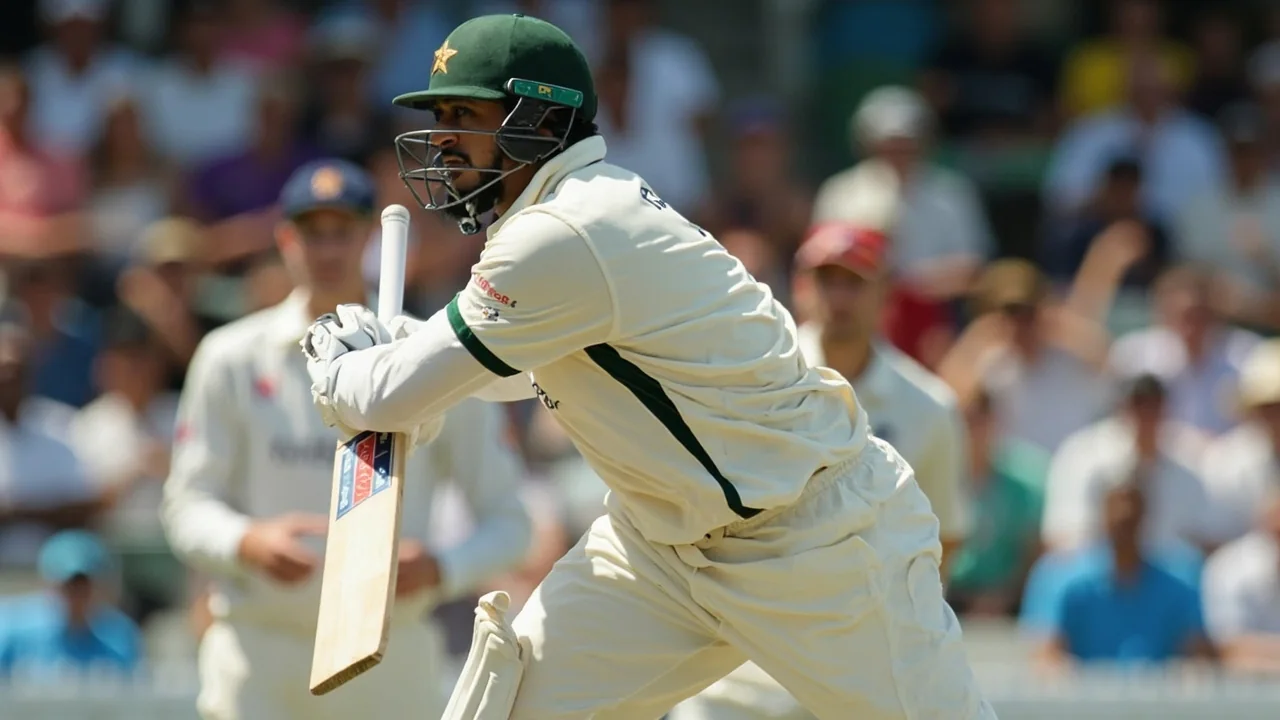
Day three of the first Test in Trinidad twisted on both sides of a single session: Pakistan slid from 244 for 3 to 282 all out as Justin Greaves ran through the lower order for figures of 5 for 27, then West Indies reached 126 for 7 by stumps, with Mohammad Abbas leading a Pakistan fightback that left the home side a 155-run lead with three wickets in hand.
A hot, demanding day three in Trinidad produced fourteen wickets and a Test that swung from morning session to evening.
· CricArena News Desk · First Test, Trinidad, Day three
Compliance Notice: CricArena is a skill-based fantasy sports platform for adults in permitted jurisdictions. Editorial coverage is built on verified match reports from day three of the first Test between Pakistan and West Indies in Trinidad on 27 July 2026. Fantasy sports involve skill and judgment. Please play responsibly and check local regulations.
A Day That Changed Shape Twice In One Session
Fourteen wickets fell on Monday in Trinidad, and the Test moved with each of them. Pakistan began the day holding the contest, with Shan Masood in the 90s and the lower order to come. They ended it dismissed for 282, having lost seven wickets for 38 runs in a startling collapse that handed West Indies a 29-run first-innings cushion and the chance to bat again on a hot, mood-swinging Trinidad surface that offered plenty for the seamers once the sun took hold.
The home side took that chance only in part. By stumps West Indies were 126 for 7, ahead by 155, with the night watchman still to come. Three Pakistan wickets in the final hour, led by Mohammad Abbas, prevented the lead from stretching further, and the dressing-room mood at the close was a long way from the morning arithmetic. Pakistan's bowling coach Umar Gul later praised Abbas's calm senior presence and the way he steered a young attack through the second half of the day.
Across that single session, the Test moved from a Pakistan position of strength to a West Indies position of control, and then back toward a contest that will resume on the fourth morning with the home side still expected to push the lead past 200. The match is not over; the direction has simply clarified.
Greaves's Career-Best 5 for 27 Turns The Morning
Justin Greaves had not taken a five-wicket haul in Test cricket before this match. By the time Pakistan's innings closed just after lunch, he had finished with 5 for 27 in 11 overs of work and the strongest case for player-of-the-day honours on either side. The spell began with the ball Pakistan needed to keep quiet: a good-length delivery that drew Shan Masood forward and produced an edge, ending a captain's innings that had reached 109.
Masood's century was his seventh in Test cricket. He had spent 184 balls at the crease, pierced the field 12 times to the boundary, and quietly carried the innings on his own through a long morning that grew hotter and more demanding by the over. When Greaves removed him, Pakistan were still 244 for 4 and the rest of the order had been waiting on a platform that suddenly stood without its anchor.
Greaves's length on day three was the difference between Pakistan holding the morning and losing it inside two sessions.
What followed was the kind of cluster that turns a Test inside a single afternoon. Pakistan lost their last six wickets for roughly 38 runs, with Greaves taking three of them and the rest shared among Shamar Joseph, who broke a 47-run fourth-wicket partnership by knocking back Salman Agha's stumps, and Kemar Roach, who finished the innings by removing last-man Khurram Shazad once the umpires signalled for the second new ball. By the time the players walked off for lunch, West Indies had a lead.
Abbas And The Pakistan Afternoon Fightback
West Indies began their second innings with the kind of licence a 29-run lead can give on a fourth-day track: positive tempo, a willingness to use the feet of the batters, and a target of pushing the game past Pakistan's reach. By the 30th over, the lead was 110 and the dressing-room talk was about a declaration window the following morning.
Mohammad Abbas had other ideas. The veteran seamer, leading the attack in the absence of Pakistan's first-choice new-ball pair, took three of the seven wickets to fall in the second innings, including the dismissal that mattered most for the away side's resistance: Greaves himself, taken low and one-handed by a diving Babar Azam at cover for 20. It was the catch of the day, and it gave Abbas his third strike of the innings.
Pakistan's bowling coach Umar Gul, speaking after the close, said Abbas's calm head and the way he carries the younger bowlers around him had been exactly what the day demanded. The same surface that had offered Greaves a hard length in the morning was now giving Abbas enough nibble to ask questions of the middle order, and the home side lost three wickets in the space of 35 runs to leave the lead at 155 rather than the 200-plus that had looked likely at tea.
Shamar Joseph Finishes Unbeaten, And The Tail Looms
Shamar Joseph's day ended the way his morning had begun: swinging, striking, and at the crease when the bowling was done. He had earlier ended the 47-run fourth-wicket alliance by removing Salman Agha in West Indies' first innings, and at stumps he was unbeaten on 22 with three sixes in a counter-attacking knock that took the local crowd's score past 120 for the first time in the innings.
His presence at the close was the small difference between a comfortable West Indies position and a contestable one. Pakistan finished the day knowing that a strike early on the fourth morning could expose Kemar Roach and the lower order below him, and that the lead, while match-defining, is not yet match-winning. West Indies, by contrast, will resume knowing that seven wickets in hand is the same number their opponents had at the start of the day, and they ended the day with the scoreboard on their side.
The slip cordon and captaincy calls mattered as much as the bowling on a pitch where patience separated the breakthroughs from the barren overs.
Why The Trinidad Surface Punished Both Innings
The day's pattern was consistent enough to deserve its own reading. The morning offered bounce and a touch of lateral carry; the afternoon session flattened out and rewarded the bowler who could vary pace and use the footholds; the evening turned two-paced, with the older ball stopping on the batter and the newer ball still hard enough to ask questions of the bat. Fourteen wickets on a single day were not a record; they were the natural consequence of a surface that offered something for every phase of the game and asked the batters to be patient through each of them.
Greaves's success came from hitting the hard length on the rising ball. Abbas's success came from angling across the right-hander and using the footholds to find the edges. Roach's success came from the second new ball, when the surface still had enough in it for the older West Indies pacer to threaten the stumps. Three different skills, same pitch, same outcome: the bowler who had a clear plan for his phase of the day was the one who took the wickets.
The forecast for the fourth morning in Trinidad is similar: hot, bright, and a track that will quicken for the first hour before the surface begins to slow. The lead of 155 is real, but it is not yet out of Pakistan's reach if the new ball moves in the opening hour and the lower order is exposed before the second new ball is due.
What The Run Of Play Tells Us About The Series
The first Test of Pakistan's tour of West Indies is now structurally different from the contest that began on Friday. Pakistan entered the day looking to build a first-innings lead of 200-plus and use their seam attack to pressure West Indies on a wearing surface. They ended the day defending a smaller position than they had hoped, with their most experienced seamer holding the innings together and the captain's century already a footnote.
West Indies, by contrast, opened the day looking to restrict Pakistan to a manageable total and bat once. They ended it with a 155-run lead, a five-wicket haul from a player who had not previously taken one, and a lower order that has shown the willingness to swing the bat when the bowling is good. The series is only one match old, but the questions for the rest of the tour have already changed shape: for Pakistan, the question is whether the seam attack can sustain the resistance Abbas provided in the evening; for West Indies, it is whether the lower order can extend the lead past 200 on the fourth morning.
Across 14 wickets, three standout bowling performances, and a captain's century that finished as the first twist rather than the headline, the day delivered the kind of Test cricket that rewards the watcher who stays through the middle session. The fourth morning will decide whether this is a match West Indies close out from here, or whether Pakistan's evening fightback has given them enough to push the contest into the fifth day.
Where To Watch The Fourth Morning
Play resumes on the fourth morning at the Queen's Park Oval in Port of Spain, with West Indies resuming on 126 for 7 and a lead of 155. The morning session will be decisive: Pakistan need early wickets to keep the lead manageable; West Indies need the kind of resistance Shamar Joseph showed at the close to push past 200 and put Pakistan back in on a wearing surface. Day-four pitch reports from the ground will be the first data point of the morning, and the state of the new ball in the first hour will set the tone for the rest of the Test. Follow further test match coverage, scoreboard notes and series reactions on the broader CricArena cricket news page.
Frequently asked questions about the Trinidad Test day three
What happened on day three of the first Test between Pakistan and West Indies in Trinidad?
Pakistan were bowled out for 282 after slipping from 244 for 3, losing seven wickets for 38 runs in a morning-to-lunch collapse. West Indies replied with 126 for 7 by stumps, a 155-run lead, with three wickets falling in the final hour to Mohammad Abbas's bowling fightback.
What were Justin Greaves's figures on day three?
Greaves took 5 for 27, his first five-wicket haul in Test cricket. He dismissed Shan Masood for 109 to start the collapse and finished the Pakistan innings by taking the last of the lower-order wickets.
How did Shan Masood get out and what was his score?
Masood was bowled by Greaves for 109, his seventh Test century. He had spent 184 balls at the crease, struck 12 fours, and held the innings together for the best part of the morning before the Trinidad surface began to offer the seamers a consistent hard length.
How many wickets did Mohammad Abbas take in West Indies' second innings?
Abbas took three wickets, including Greaves taken low by Babar Azam at cover for 20. Pakistan bowling coach Umar Gul praised Abbas's calm senior presence and the way he steered a young attack through the second half of the day.
What is West Indies' lead at stumps on day three?
West Indies lead by 155 runs with three wickets in hand. They were 126 for 7 at stumps, with Shamar Joseph unbeaten on 22 and Kemar Roach still to come. The morning session on day four will decide whether the lead stretches past 200 or stays manageable for Pakistan.
Who was batting at the close for West Indies and who took the last wicket of Pakistan's innings?
Shamar Joseph was unbeaten on 22 with three sixes at the close. Kemar Roach ended the Pakistan innings by dismissing last-man Khurram Shazad once the second new ball was taken.
What was West Indies' first-innings total in Trinidad?
West Indies scored 311 in their first innings. Pakistan replied with 282, a 29-run advantage for the home side that turned into a 155-run lead by stumps on day three after the West Indies second innings.
Follow test match coverage and series reactions on CricArena
Day-four notes, scoreboard updates, and selection reactions from the CricArena news desk.