India Turned to Prasidh and Washington After Double Hamstring Blow at Bristol
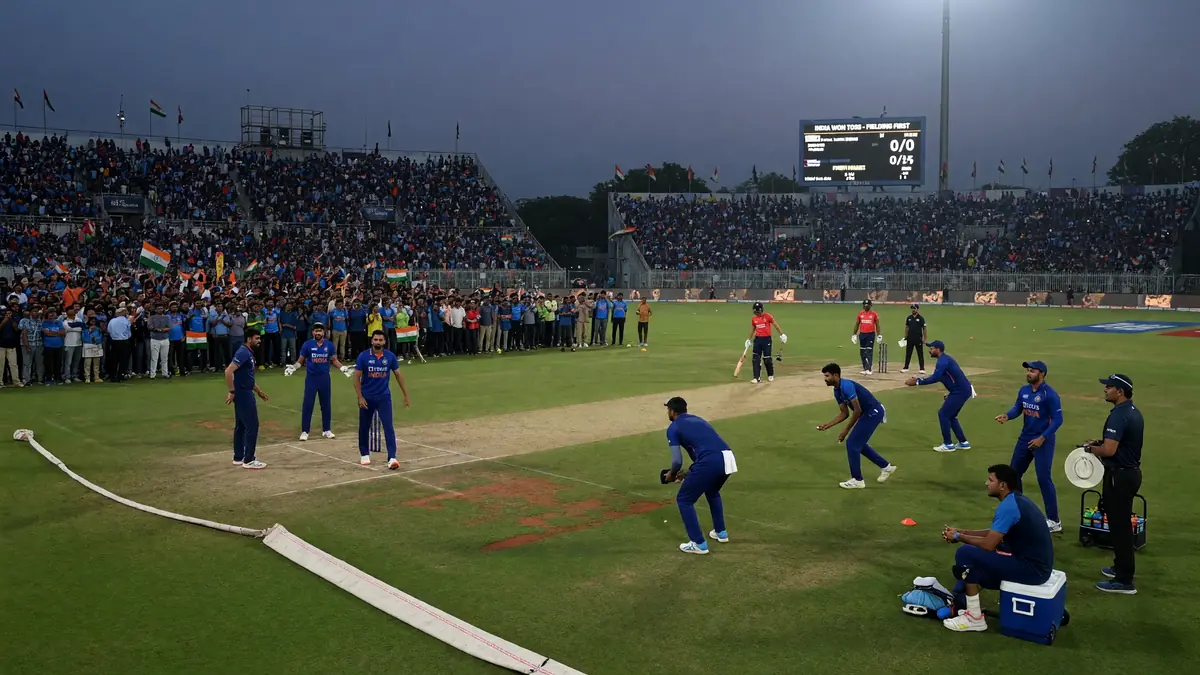
On the evening of 9 July 2026 at Bristol, India walked into the fourth T20I against England already 2-0 down, without pacer Harshit Rana and spinner Varun Chakravarthy, and chose to bowl first after winning the toss on a grass-covered surface.
Bristol hosted the fourth India–England T20I with the visitors still searching for a first win of the series.
· CricArena News Desk · Fourth T20I, Bristol
Compliance Notice: CricArena is a skill-based fantasy sports platform for adults in permitted jurisdictions. Editorial coverage reflects verified match-night information from the fourth T20I at Bristol on 9 July 2026. Fantasy sports involve skill and judgment. Please play responsibly and check local regulations.
Bristol on 9 July: a series already tilted
England held a 2-0 lead when the fourth T20I of the five-match set reached Bristol. The opening fixture had been abandoned because of rain, so two completed matches had already gone the hosts’ way. For India, the arithmetic on the night was blunt: a defeat would end any realistic claim on the series; a win would only restore a path that still required another result later in the tour.
Newly appointed captain Shreyas Iyer arrived at that toss without a T20I victory in charge. India’s 0-2 loss to Ireland shortly before the England series had opened his ledger, and the first three scheduled games of this visit had not reversed it. Bristol was therefore both a series hinge and a personal checkpoint for the new leadership group.
Iyer did not dilute the occasion. He called it a must-win assignment and said India would keep the fearless approach they had tried to carry through the earlier games, while admitting the side had not executed plans as cleanly as intended. The public message was reset rather than retreat: a fresh evening, high spirits, and a demand to adapt to conditions faster than before.
Two hamstrings forced the XI rewrite
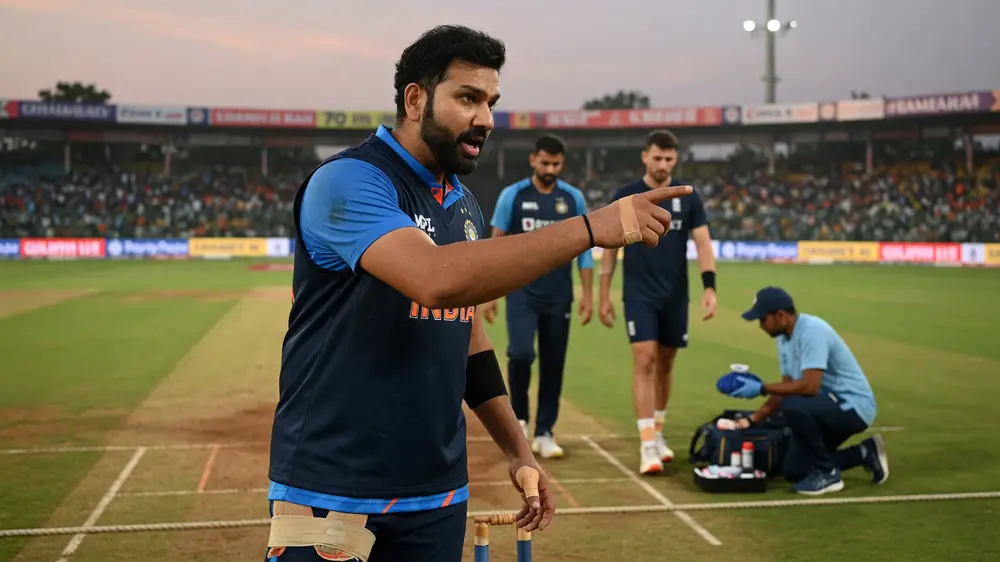
The decisive selection story was medical. Rana and Chakravarthy both suffered hamstring injuries in the third T20I and were ruled out of Bristol and the final match of the series. India lost a right-arm pace option and their main wrist-spin threat in a single bulletin, then rebuilt the bowling group on short notice.
Prasidh Krishna replaced Rana. Washington Sundar replaced Chakravarthy. The swaps were not perfect mirrors. Prasidh restored a tall, hit-the-deck seamer who can attack a hard length and the yorker; he did not automatically recreate Rana’s exact match-ups. Washington returned as a batting all-rounder and off-spinner, adding a left-hand bat in the middle and a different spin axis from Chakravarthy’s googlies and wrong’uns.
Iyer confirmed the changes at the toss without ornament: Varun and Harshit out, Washington and Prasidh in. The tone fitted the situation. India were already behind on the series board; they could not also be sentimental about unavailable players on a night that demanded immediate answers.
Prasidh Krishna’s call-up restored a tall pace option after Harshit Rana’s hamstring exit from the final two matches.
How the rebuilt attack was meant to function
India’s listed Bristol attack still had Arshdeep Singh and Prince Yadav as left-arm and right-arm pace support, with Axar Patel holding the left-arm finger-spin role and Washington adding off-spin overs. Chakravarthy’s absence was the sharper tactical hole. England’s middle order had thrived when slower balls sat up or turned away from the right-hander; wrist-spin is often the counter. Without it, India needed Axar and Washington to manage the middle overs through angles, pace changes and field placement rather than a high volume of unreadable wrong’uns.
Prasidh’s value sat at the other end of the innings. If the Bristol surface offered early bounce or skid under lights, a tall seamer hitting a hard length could compress England’s powerplay scoring. If the ball stopped gripping later, his yorker and wide-line options mattered more than pure swing. Either way, India asked him to arrive cold into a high-leverage fixture and own a spell that could define the night.
Washington’s presence also nudged the batting-bowling balance toward depth. He lengthened the lower middle order behind Shivam Dube and Axar, useful whether India were chasing or protecting a total with wickets in hand. The trade-off was plain: fewer specialist bowling outs, more flexible overs, and an extra left-hand bat against England’s mix of right-arm pace and leg-spin.
Toss, grass cover and wind awareness
India won the toss and elected to field first. Both captains read the pitch in similar terms: a good-looking surface with a decent, even covering of grass. Harry Brook said England would also have chosen to bat had they won the toss. When both captains prefer the same first innings, the side bowling first is usually either chasing a later dew edge or trusting its attack to use early conditions before the ball softens.
Iyer spent as much time on awareness as on pitch colour. He stressed reading the environment, adjusting to the wicket quickly, and tracking where the wind was blowing. Those are small-ground, English-summer details that decide whether a length ball becomes a slot ball and whether a slower cutter holds or sits. Bristol is not a vast oval; misreading the breeze for a single over can turn a containment plan into a free-hit sequence.
The field-first call also matched the series state. India needed a complete performance. Bowling first gave them a fixed target later and a chance to apply scoreboard pressure if the attack landed early blows. It also exposed the rebuilt attack immediately. There would be no gentle settling-in period with the bat while the bowlers waited until a chase.
One internal tension in the night’s public remarks is worth recording carefully. The match report from the toss stated that India chose to field first, while Iyer’s quoted comments in the same briefing also referred to batting first as the intended approach. The formal election recorded for the fixture was to bowl; the quotes show how fluid the surface conversation remained even as the coin was called.
With wrist-spin unavailable, India’s middle-over plan leaned on angles, pace changes and disciplined ring fields.
England’s single change and home-series poise
England made one alteration: all-rounder Rehan Ahmed came in for Liam Dawson. The move kept a multi-skill option in the eleven while refreshing the spin look. Brook’s public tone was calm. He praised the side’s adaptation and communication through the series, pointed to the number of contributors across batting, bowling and the field, and made no secret of the prize on offer that night. A win at Bristol would seal the series with a match to spare.
England’s listed XI mixed proven T20 power with modern all-round depth: Philip Salt and Jos Buttler at the top, Brook himself in the middle order as captain, Jacob Bethell and Tom Banton as left-hand and right-hand options, Sam Curran and Will Jacks for overs and lower-order hitting, Rehan Ahmed as the leg-spin all-rounder, and a finishing attack of Jofra Archer, Adil Rashid and Josh Tongue. It was a side built to close a home summer series rather than merely contest one.
Brook’s emphasis on communication mattered more than the cliché suggests. England had been rotating roles without losing shape; India, by contrast, had been forced into changes by injury at the exact moment the series demanded continuity. The home side could talk about “more of the same.” The visitors had to invent a new bowling shape overnight.
The XIs named in Bristol
India’s listed eleven was Abhishek Sharma, Vaibhav Sooryavanshi, Ishan Kishan (wicketkeeper), Shreyas Iyer (captain), Tilak Varma, Shivam Dube, Washington Sundar, Axar Patel, Prince Yadav, Arshdeep Singh and Prasidh Krishna.
England’s listed eleven was Philip Salt, Jos Buttler (wicketkeeper), Harry Brook (captain), Jacob Bethell, Tom Banton, Sam Curran, Will Jacks, Rehan Ahmed, Jofra Archer, Adil Rashid and Josh Tongue.
India’s top order still leaned on left-hand aggression through Abhishek and the young presence of Sooryavanshi, with Kishan offering glove work and a middle-order left-hand option if promoted. Iyer’s own batting seat remained central to any chase or set total. Tilak and Dube supplied the left-right middle punch, while Washington and Axar blurred the line between finishing batters and bowling all-rounders. The back end was pace-heavy once Chakravarthy was removed: Prince Yadav, Arshdeep and Prasidh were the designated wicket-taking seam trio.
For form-watchers, the notable inclusions were pragmatic. Prasidh’s ceiling rose in any game where early bounce appeared. Washington’s floor rose because he could contribute with bat or ball. Rehan’s return for England was the home differential if the surface gripped even slightly under lights.
Captaincy pressure on a forced shortlist
Captaincy narratives harden quickly in white-ball cricket. Iyer reached Bristol after the Ireland whitewash and still without a win in charge. The night would not invent a full leadership record either way, but it sat squarely inside the window when selectors and former players watch process as closely as results: how plans are explained, how injuries are absorbed, and whether the group looks organised when the series script turns hostile.
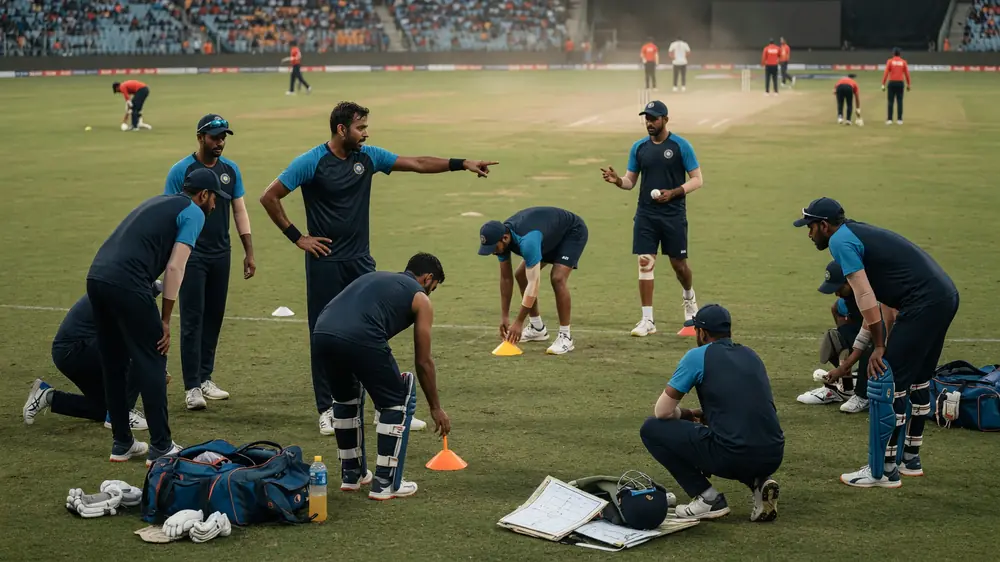
Iyer’s own comments stayed process-first. He spoke about spirit, about treating the previous game as history, and about tactical awareness of wind and surface. He did not invent excuses around the injuries, and he did not oversell the replacements. Teams trailing 2-0 often either panic into wholesale experimentation or freeze into the same losing patterns. Naming Prasidh and Washington was a forced change; how those two were used through the middle overs would show whether the staff had a plan beyond filling jersey numbers.
There is also the longer India white-ball context around that summer. Roles for Abhishek at the top, Tilak in the middle, Axar as the left-arm all-round pivot, and Arshdeep at the death were still being stress-tested away from home. Bristol supplied another data point in that programme, even while the immediate goal was simply to stay alive in the series.
Four questions the first ball asked
First, England’s powerplay against a seam attack missing Rana. Salt and Buttler punish anything full and straight; Prasidh and Arshdeep needed a clear plan on wide lines versus hard lengths, not a mixed menu that offered both width and pace on.
Second, India’s middle-over spin without Chakravarthy. Axar from one end and Washington from the other had to vary pace and use the breeze. If Brook or Bethell settled against finger-spin, England’s total would inflate quickly on a ground that rewards clean striking.
Third, the death overs either way. Prince Yadav and Arshdeep remained India’s designated late-over pair; Prasidh’s yorker control would decide whether India could defend a moderate total or choke a chase. For England, Archer and Tongue carried the same burden with Rashid as the middle-over disruptor.
Fourth, India’s chasing composure if the field-first plan worked. The top three had to set a platform without burning too many resources, because the middle order still depended on Tilak and Dube finding the boundary under a climbing rate. Washington at seven was insurance, not a licence for another top-order collapse.
What that Bristol selection still shows
The lasting picture from 9 July at Bristol is not a hypothetical about later fixtures. It is the snapshot of an India white-ball side forced to rewrite its attack mid-series under a new captain, while England — settled, communicative and one change from their preferred shape — prepared to close a home set.
The double hamstring exit of Rana and Chakravarthy underlined how thin specialist depth can look once two dissimilar bowling roles vanish together. Wrist-spin and hit-the-deck pace are not interchangeable spare parts; replacing them with Prasidh and Washington changed both the wicket-taking profile and the batting cushion. That is why the XI list from Bristol remains a useful reference when later India squads discuss contingency planning for multi-format summers.
For Iyer’s captaincy file, the night belongs with the early evidence rather than the finished verdict: clear public framing of a must-win, honest admission of poor earlier execution, and a willingness to name forced changes without theatrical cover. For England, Brook’s remarks captured a side that expected to finish the job through familiar strengths — adaptation, shared contributions, and calm communication — with Rehan Ahmed available as a flexible all-round lever.
Readers tracking India white-ball selection notes, injury bulletins and series turning points can follow further desk coverage across CricArena cricket news.
Frequently asked questions about the Bristol fourth T20I
Why were Harshit Rana and Varun Chakravarthy missing at Bristol?
Both suffered hamstring injuries during the third T20I and were ruled out of the final two matches of the five-match series. Prasidh Krishna replaced Rana and Washington Sundar replaced Chakravarthy in India’s eleven.
What was the series score before the fourth T20I?
England led 2-0. The first match of the five-game series was abandoned because of rain, so two completed games had gone England’s way before Bristol.
Who won the toss and what did India choose?
India won the toss and elected to field first. Both captains described the surface as having a decent covering of grass, and Harry Brook said England would also have preferred to bat.
What change did England make?
England brought in all-rounder Rehan Ahmed in place of Liam Dawson. It was their only listed change for the Bristol match.
Had Shreyas Iyer won a T20I as India captain before Bristol?
No. India had not secured a win under Iyer after the 0-2 T20 series loss to Ireland shortly before the England series, and the side was still searching for a first victory in this set as well.
Why does the Bristol XI still matter as a reference point?
It captures a forced mid-series rebuild: India lost a seamer and a wrist-spinner together, named Prasidh Krishna and Washington Sundar, and faced a must-win assignment while England needed one more victory to seal a home series. That combination of injury shock, captaincy pressure and home-side composure is the historical value of the night.
Follow India match nights and selection calls on CricArena
Series updates, injury notes, and white-ball XI reactions from the CricArena news desk.