Kohli Missed India's First ODI Against Afghanistan in Dharamsala: Fantasy XI Lessons From June 2026
On 13 June 2026, The Indian Express reported that Virat Kohli would sit out India's first ODI against Afghanistan in Dharamsala while Rohit Sharma was expected to play. The build-up note also carried predicted XIs and full squads for both sides — a snapshot that still rewards a careful fantasy reread months later.
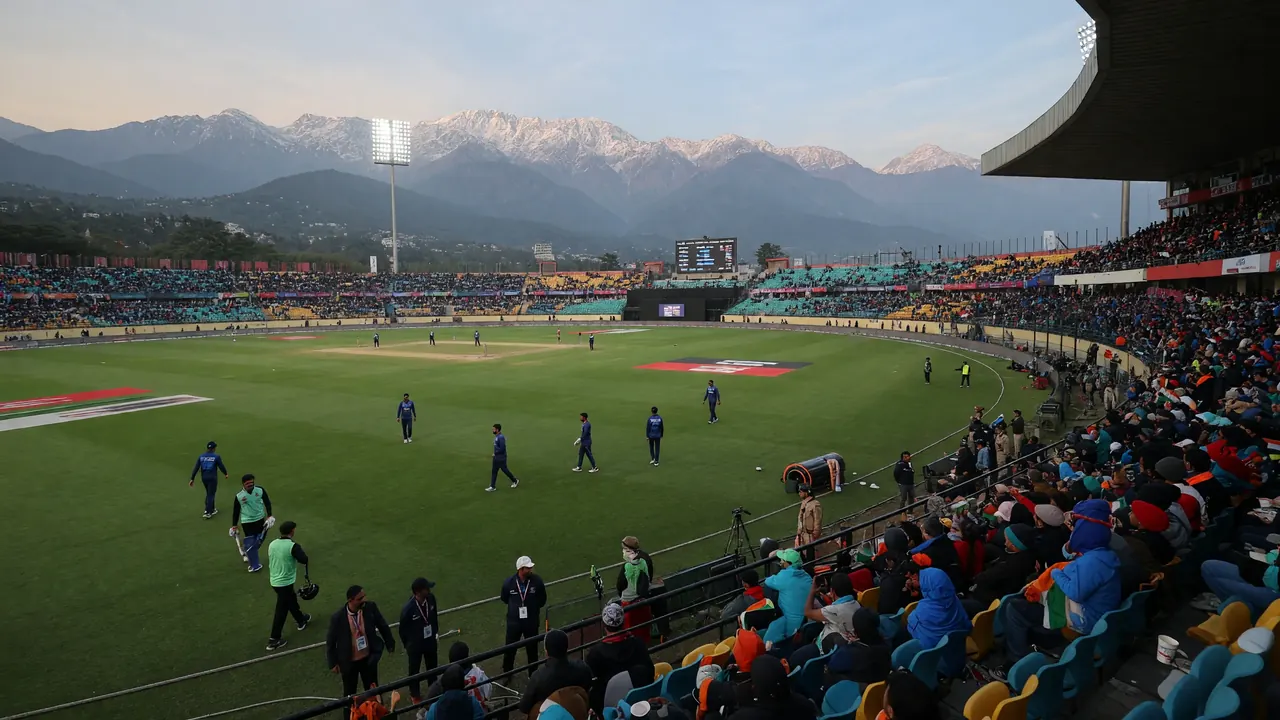
Dharamsala's first ODI of the series forced managers to rebuild middle-order plans once Kohli was confirmed unavailable.
· CricArena Fantasy Desk · Retrospective · Source date 13 June 2026
Compliance Notice: CricArena is a skill-based fantasy sports platform for adults in permitted jurisdictions. This retrospective is built on a verified selection report originally published by The Indian Express on 13 June 2026 about India's first ODI against Afghanistan in Dharamsala. Fantasy sports involve skill and judgment. Please play responsibly and check local regulations.
Why The 13 June Report Still Matters For Fantasy Readers
The original note was not a post-match scorecard. It was a pre-match selection brief: Kohli unavailable for the opener, Rohit expected in the XI, India chasing momentum after recent ODI series losses to New Zealand and Australia, and a bowling group missing Jasprit Bumrah and Mohammed Siraj for the series setup. For fantasy managers, those four facts alone rewrote the usual India template before a ball was bowled in Dharamsala.
Selection reports of this kind reward a second look because they freeze the decision tree at a single moment. Managers who locked teams that week had to price captain risk without Kohli's middle-order floor, decide whether Rohit's return was a must-start or a cautious inclusion, and treat India's seam options as a two-way contest rather than a settled pair. Months on, the same brief remains a clean case study in how absence news travels through salary caps, ownership clusters and role swaps.
What follows stays inside that verified record. Predicted XIs are treated as contemporary forecasts from the 13 June report, not as confirmed match sheets. Where the source framed a choice rather than a certainty — Arshdeep Singh versus Prasidh Krishna for a bowling berth, Nitish Kumar Reddy covering Hardik Pandya's all-rounder slot — the language keeps that distinction intact.
Kohli Out, Rohit Expected In: The First Ownership Shock
Kohli's absence was the headline line for a reason. In most India ODI fantasy pools he sits near the top of ownership because managers trust his ability to bat through the middle overs and convert starts. Removing him from the first Dharamsala fixture did not simply free credits; it forced a structural rewrite of the batting stack. The safe middle-order anchor disappeared, and the field had to choose between stacking India's remaining top five or hunting differential value lower down.
Rohit's expected availability cut the other way. A returning senior opener usually pulls high ownership even when form notes are mixed, because captains and vice-captains still chase his ceiling against a pace-friendly new ball. The June report did not claim a confirmed score or a fixed batting position beyond the broader expectation that he would play; it simply put him on the expected side of the selection ledger while Kohli sat out. For managers, that meant Rohit was a near-automatic shortlist name, while the true puzzle sat one or two places below him.
India's wider context mattered for risk appetite. The same report noted recent ODI series losses to New Zealand and Australia and a desire to rebuild momentum toward the next ODI World Cup cycle. That is not a fantasy points figure, but it is a selection signal: when a side is chasing rhythm, fringe players with a defined role often get a cleaner look than they would in a settled winning unit. Fantasy value frequently hides in those temporary openings.
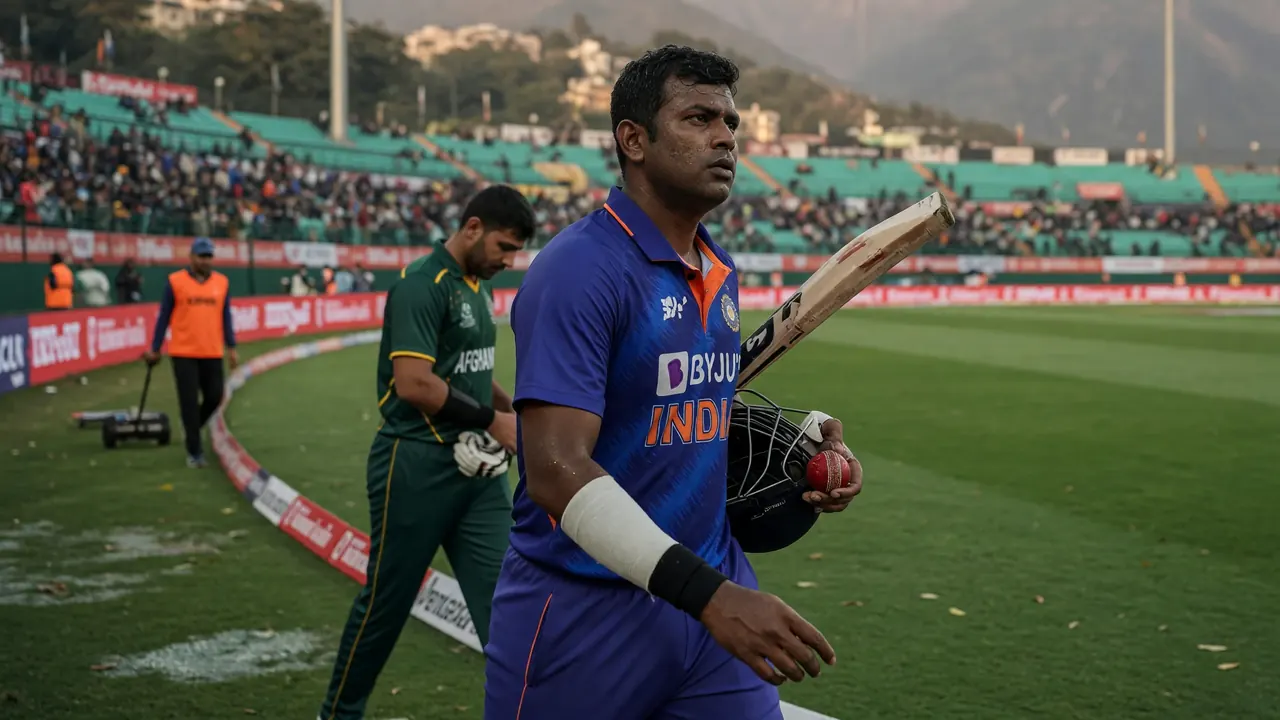
Without Kohli in the middle order, managers had to re-price India's batting stack and decide how aggressively to chase Rohit's ceiling.
India's Predicted XI And The Roles Inside It
The 13 June report listed a predicted India XI of Shubman Gill (captain), Rohit Sharma, Ishan Kishan, Shreyas Iyer (vice-captain), KL Rahul (wicketkeeper), Nitish Kumar Reddy, Washington Sundar, Harsh Dubey, Kuldeep Yadav, Arshdeep Singh and Prasidh Krishna. Read as a fantasy skeleton, the side splits into four decision blocks rather than eleven equal names.
The top order carried the run-floor argument. Gill as captain of the side already concentrated leadership narrative and batting responsibility; Rohit and Kishan filled the early overs; Iyer and Rahul held the middle. For salary-cap contests, that block tends to absorb most of the batting budget because managers hate finishing a match with zero India top-order exposure. The June brief did not invent new roles for those five; it simply confirmed that Kohli's usual seat was being redistributed among players already inside the core group.
The all-rounder and spin block was more interesting. Nitish Kumar Reddy was framed as the beneficiary of Hardik Pandya's absence — a classic fantasy pivot, because the player who inherits the seam-bowling all-rounder overs often becomes the highest-leverage differential in the side. Washington Sundar and Harsh Dubey added bowling overs with batting depth behind them, while Kuldeep Yadav remained the specialist wrist-spin wicket threat. Managers who treat every India XI as "four batters, one keeper, six bowlers" miss the way those hybrid overs change captaincy math on a Dharamsala surface.
The seam end of the XI was deliberately unfinished in the report. Arshdeep and Prasidh both appeared in the predicted side, yet the same article framed a bowling spot as a contest between them. That tension is useful even in hindsight: when a contemporary report lists both names and still describes a battle for a place, ownership should not treat either as locked. Fantasy discipline means holding a late swap ready until the final XI card, not assuming a dual listing equals dual selection certainty.
What The Full India Squad Revealed About Bench Pressure
Beyond the predicted XI, the India squad named in the report included Rohit Sharma, Shubman Gill (captain), Yashasvi Jaiswal, Ishan Kishan, Shreyas Iyer, KL Rahul (wicketkeeper), Washington Sundar, Nitish Kumar Reddy, Harsh Dubey, Kuldeep Yadav, Arshdeep Singh, Gurnoor Brar, Prasidh Krishna and Prince Yadav. The gap between squad and XI is where sharper managers work.
Jaiswal's presence was the clearest bench story. The report described him as waiting after strong limited opportunities — available, in form enough to be discussed, yet outside the predicted first XI. That is a textbook late-swap watch. If an opening batter or middle-order name fails a fitness check on match morning, the player already framed as "ready on the bench" becomes the ownership spike. Even when he does not play, logging that contingency prevents panic substitutions into lower-upside names.
Gurnoor Brar and Prince Yadav filled the pure pace depth behind Arshdeep and Prasidh. Their fantasy relevance in a first ODI is usually low unless one of the preferred seamers is ruled out, but their inclusion explained why the bowling contest was real: India had more than two quicks in the travelling group, so selection could tilt on match-up and workload rather than pure reputation. Bumrah and Siraj's unavailability for the series setup made that depth operational rather than theoretical. The attack was not waiting for two established names to walk back in for Dharamsala; it was choosing among the bowlers already on site.
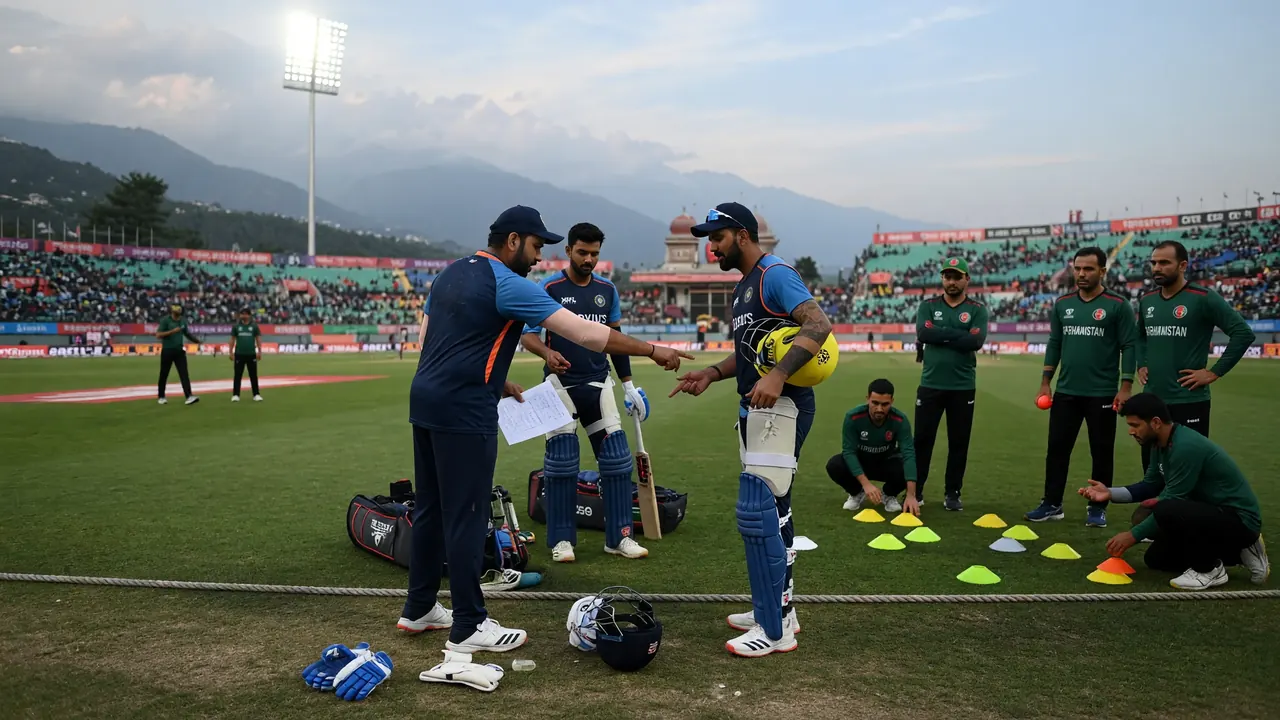
India's bowling combination for Dharamsala was still a live selection question, with Arshdeep and Prasidh both in the predicted frame and pure pace depth waiting behind them.
Afghanistan's Predicted XI And The Fantasy Counterweights
The same 13 June brief carried an Afghanistan predicted XI: Rahmanullah Gurbaz (wicketkeeper), Ibrahim Zadran, Rahmat Shah, Hashmatullah Shahidi (captain), Azmatullah Omarzai, Mohammad Nabi, Rashid Khan, Nangeyalia Kharoti, AM Ghazanfar, Bilal Sami and Fareed Ahmad. For India-centric fantasy contests that still allow opposition stacking, those names define the counter-attack and the bowling threat managers must price.
Gurbaz and Zadran form the familiar early-overs engine. Gurbaz's dual role as wicketkeeper-batter keeps him inside both wicketkeeper and batting conversations on most platforms, while Zadran's top-order stability makes him the safer anchor when managers want Afghanistan exposure without pure boom-or-bust risk. Rahmat Shah and Shahidi occupy the classical middle, where ODI accumulators often outscore flashier names if the innings stretches past the 30th over.
The all-round and spin cluster is where Afghanistan usually punches above salary expectations. Omarzai offers seam-bowling overs plus middle-order hitting; Nabi remains a multi-skill veteran whose fantasy floor rises when he bowls a full quota; Rashid Khan is the ownership magnet whenever wrist-spin is expected to matter. Kharoti and Ghazanfar extend the spin options, while Bilal Sami and Fareed Ahmad cover the new-ball and death-overs seam work in the predicted frame. None of those roles needed invention after the fact — they were already visible in the June prediction and still map cleanly onto modern fantasy role tags.
The practical stacking rule from that XI is simple. If a manager faded India's middle order because Kohli was out, Afghanistan's top four and Rashid became the natural hedge rather than a random chase of low-owned India bowlers. Conversely, if a manager still loaded Gill, Rohit, Iyer and Rahul, Afghanistan value concentrated in one spinner and one all-rounder rather than a full five-player opposition stack. The predicted card gave enough structure to make that choice deliberate.
The Fantasy Decision Tree Forced By The Brief
Read purely as a fantasy worksheet, the 13 June report created five locked decisions and three flexible ones. The locked set: Kohli unavailable; Rohit expected to play; Bumrah and Siraj out of the series setup; Reddy lined up in Pandya's absence; both teams' predicted skeletons already published. The flexible set: whether Jaiswal forced his way into the final India XI; which of Arshdeep or Prasidh truly owned the contested seam overs; how heavily to weight Rashid and Omarzai against an India batting group missing its usual middle-order constant.
Captaincy math shifted first. Without Kohli, Gill and Rohit absorbed most safe captain ownership, with Rahul and Iyer as secondary cash-game options. Differential captains drifted toward Reddy if managers believed the all-rounder overs were real, or toward Rashid if they expected Afghanistan to bowl first on a surface offering grip. Neither differential was free: Reddy's upside depended on bowling volume that a pre-match report could only imply, and Rashid's upside depended on India not simply blasting through the middle overs.
Salary construction shifted second. Kohli's usual price tag leaving the pool created room for a second all-rounder or an extra Afghanistan spinner. Managers who simply replaced Kohli with the next India batter often wasted the credit swing. The cleaner rebuild used part of those credits on Reddy or Washington Sundar — players whose bowling overs could return value even if their batting stayed quiet — and kept a small reserve for a late Jaiswal injection if the final XI broke from the prediction.
Ownership psychology shifted third. Kohli absences in India colours still produce copycat behaviour: the field overloads the remaining brand-name batters and underweights the role player who actually inherited the missing overs. The June brief made Reddy that role player on paper. Whether or not every manager acted on it at the time, the structural lesson survives. When a star batter sits and an all-rounder is explicitly named as the beneficiary of another star's absence, the first spreadsheet pass should test the all-rounder before it stacks a fourth pure batter.
What Endures From The Dharamsala Build-Up
Retrospectives are useful only when they leave a reusable rule. The Dharamsala first-ODI brief leaves three. First, confirm absences before defending default ownership — Kohli's unavailability was not a rumour buried in a subordinate clause; it was the organising fact of the report. Second, treat predicted XIs as maps of role intent, not as sacred final cards, especially when the same article still describes a live bowling contest. Third, read squad lists for the next man in: Jaiswal's bench framing was as actionable as any predicted starter for managers who build contingency plans rather than single line-ups.
The broader India story around the fixture also still frames later white-ball planning. A side coming off ODI series losses to New Zealand and Australia, missing Bumrah and Siraj for the series setup, and handing leadership to Gill was not picking from a position of settled abundance. It was balancing experience (Rohit, Rahul, Iyer) with opportunity (Reddy, Dubey, the seam contest). Fantasy sides that mirrored only the experience half of that balance left the opportunity half on the table.
For readers who still build India ODI teams today, the June 2026 note is less about one mountain venue and more about process. Star absences reshuffle credits. Explicit succession lines — Reddy for Pandya, a named seam contest, a form batter waiting on the bench — are the clues that turn a generic India stack into a match-specific one. Keep those habits, and the next selection brief becomes easier to translate into a coherent XI.
Further role guides, salary-cap frameworks and white-ball selection notes remain collected under Fantasy Cricket for managers who want the wider desk archive beside this retrospective.
Frequently asked questions about the Dharamsala first ODI build-up
When was the original India vs Afghanistan first ODI selection report published?
The Indian Express published the playing-XI and squad note on 13 June 2026 at 08:00:49 IST, with an update the same day at 05:44 PM IST. The byline was Sports Desk. This retrospective uses that dated brief as its factual ceiling.
Was Virat Kohli available for India's first ODI against Afghanistan in Dharamsala?
No. The 13 June report stated that Kohli was set to miss the first ODI. Rohit Sharma, by contrast, was expected to play. That split was the primary fantasy ownership shock in the build-up.
Which India XI did the June 2026 report predict?
The predicted India side was Shubman Gill (captain), Rohit Sharma, Ishan Kishan, Shreyas Iyer (vice-captain), KL Rahul (wicketkeeper), Nitish Kumar Reddy, Washington Sundar, Harsh Dubey, Kuldeep Yadav, Arshdeep Singh and Prasidh Krishna. It was a contemporary forecast, not a post-match confirmed sheet.
Why was Nitish Kumar Reddy highlighted in the selection brief?
The report said Reddy would get an opportunity in Hardik Pandya's absence. For fantasy managers, that framed him as the seam-bowling all-rounder pivot rather than a pure lower-order batter.
Were Jasprit Bumrah and Mohammed Siraj part of the Dharamsala series setup?
The brief said both were unavailable for the series setup and expected to return later. That left India's pace attack to be chosen from the bowlers already in the squad, including the Arshdeep–Prasidh contest.
What Afghanistan XI was predicted in the same report?
Rahmanullah Gurbaz (wicketkeeper), Ibrahim Zadran, Rahmat Shah, Hashmatullah Shahidi (captain), Azmatullah Omarzai, Mohammad Nabi, Rashid Khan, Nangeyalia Kharoti, AM Ghazanfar, Bilal Sami and Fareed Ahmad.
Where did Yashasvi Jaiswal sit in the India picture?
Jaiswal was named in the squad and described as waiting on the bench after performing well in limited chances. He was not in the predicted first XI, which made him the clearest late-swap contingency among the batters.
Build sharper white-ball fantasy sides on CricArena
Use selection notes, role splits and salary-cap habits from the fantasy desk before you lock your next XI.